Exactly Editing

Crafting writing worth reading

“From the start, words were more real to me than real life, and certainly more interesting…”

(Robert Gottlieb)

  • Is editing just about tinkering with details in your writing? 
  • Is editing always about ‘taking away’, rather than ‘adding’ to your writing? 
  • Is editing mostly criticism and discouragement? 
  • Is editing a one-way street, in terms of feedback and communications between the editor and author/writer? 

At Exactly Editing, the resounding answer to all these questions is “no”.​

Cat in books
Pile of books

I’ve been reading and editing for long enough to know that we can all write well, under the right circumstances. We can all produce writing that others want to read. We can all publish manuscripts, papers, articles and reports that read well, and make your reader want to share your writing with more people.

A good editor can help you with all of these things as you write, and a good editor is also willing to learn from you.

At Exactly Editing, I edit in two ways, essentially answering one (or both) of two questions for the authors/writers I work with:

  1. What makes a person want to read this writing, and keep reading it?
    (​Creative Editing and ​Book Doctor work) 

  2.  Is this writing ‘readable’? 
    (​Procedural Editing) 

Find out more here…

“If you don't have time to read, you don't have the time (or the tools) to write. Simple as that.”

~ (Stephen King)

Creative Editing:​

Shaping your writing into what your readers like reading

Developmental Editing

  • Creative and collaborative
  • The bridge between positioning your book for sale and later editorial phases​
  • Interpersonal and generative (challenging, questioning, brainstorming, supporting and guiding)

  • Macro level (looking at your work as a whole) edits
  • Tools are provided to help you shape and build your writing yourself, as you go on to develop it further

Line Editing

  • Creative and collaborative​
  • Studying your manuscript via full immersion in your writing and your process ​
  • Interpersonal and generative (supporting, questioning, modelling, suggesting, building)

  • Macro (sections, parts, chapters), mid-micro (paragraphs, sentences), and micro (phrases, words, sometimes punctuation) levels of edits

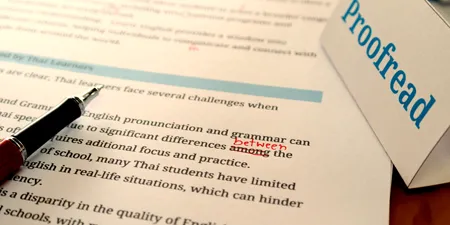
  • Tools are provided to help you self-edit as you write

Procedural Editing:​

Helping your writing to be read fluently

Copy Editing

  • Procedural (detailed)​
  • Checking for accuracy in grammar, spelling and syntax
  • Checking for consistency and coherence
  • Some (simple and optional) refinement of formatting and style​
  • Fact-checking​
  • Development of a style sheet (if required)
Copyediting

(Academic) Proofreading

Proofreading
  • Procedural (a once-over)
  • The human ‘spellchecker’ – checking for (obvious) errors, inconsistencies, and anomalies in grammar, spelling and syntax only
  • Surface level edits only (except for theses/dissertations, which require deeper and more delicate work sometimes – please contact me to find out more…)
  • Referring to/building on a style sheet (from the copy editor)

Manuscript Assessment 

Manuscript assessment is a good option for first time writers, students, young adults and/or those who have a very tight budget. It requires a completed manuscript/piece of long-form writing, which has been drafted and re-drafted a few times - i.e. it needs to be coherent and of fairly high quality already, but it does not need to be absolutely perfect or fully ready to submit to an agent/publisher.


Manuscript assessment includes:

  • A short introductory call to talk about your manuscript and your key aims
  • A full read-through by an editor experienced in your type of writing/genre
  • Feedback in the form of:
    • Editorial notes (on how marketable your writing/manuscript already is, and how to make it more so)
    • Comments in your text (where necessary)
    • Verbal feedback via a closing call
Copyediting
  • Guidance about which type of editing your manuscript would benefit most from in future, pre-publication
  • Feedback, tailored to what your ideal readership will be looking for (although it will only be very surface level)


It does not include:

  • Detailed editorial support
  • Ongoing feedback
  • A guarantee of developmental, line or copy editing support in future (although this can always be discussed)
  • Getting your manuscript to the stage where it is ready to be submitted for publication/to self-publish


Manuscript assessment carries a set fee, which is based on the length of your manuscript at the start of the reading phase and the type of writing (or genre) you are working on. Fees start at around €700 for 50K (fiction/non-fiction), and €450 for 20K (children’s fiction/non-fiction).

“If there's a book that you want to read, but it hasn't been written yet, then you must write it.”

― Toni Morrison

Privacy policy

OK